- Date
- November 25, 2026
- Prepared by
- Amara Osei
Australia fines tech platforms up to 5% of global revenue under new duty of care
Australia's Digital Duty of Care Act passed 97-43, fining tech platforms up to 5% of global revenue for foreseeable online harms. The opposition vows repeal by 2028.
Action points
- The Digital Duty of Care Act passed the Australian House of Representatives 97-43 on Wednesday and the Senate 36-23.
- Maximum penalties rose from A$109 million to 5% of a company's global revenue under Greens amendments.
- The law covers online services including games, apps and AI chatbots.
- Opposition leader Angus Taylor vowed to repeal the law if his Liberal Party wins the 2028 elections.
- The legislation parallels the EU Digital Services Act (2022) and the UK Online Safety Act (2023).
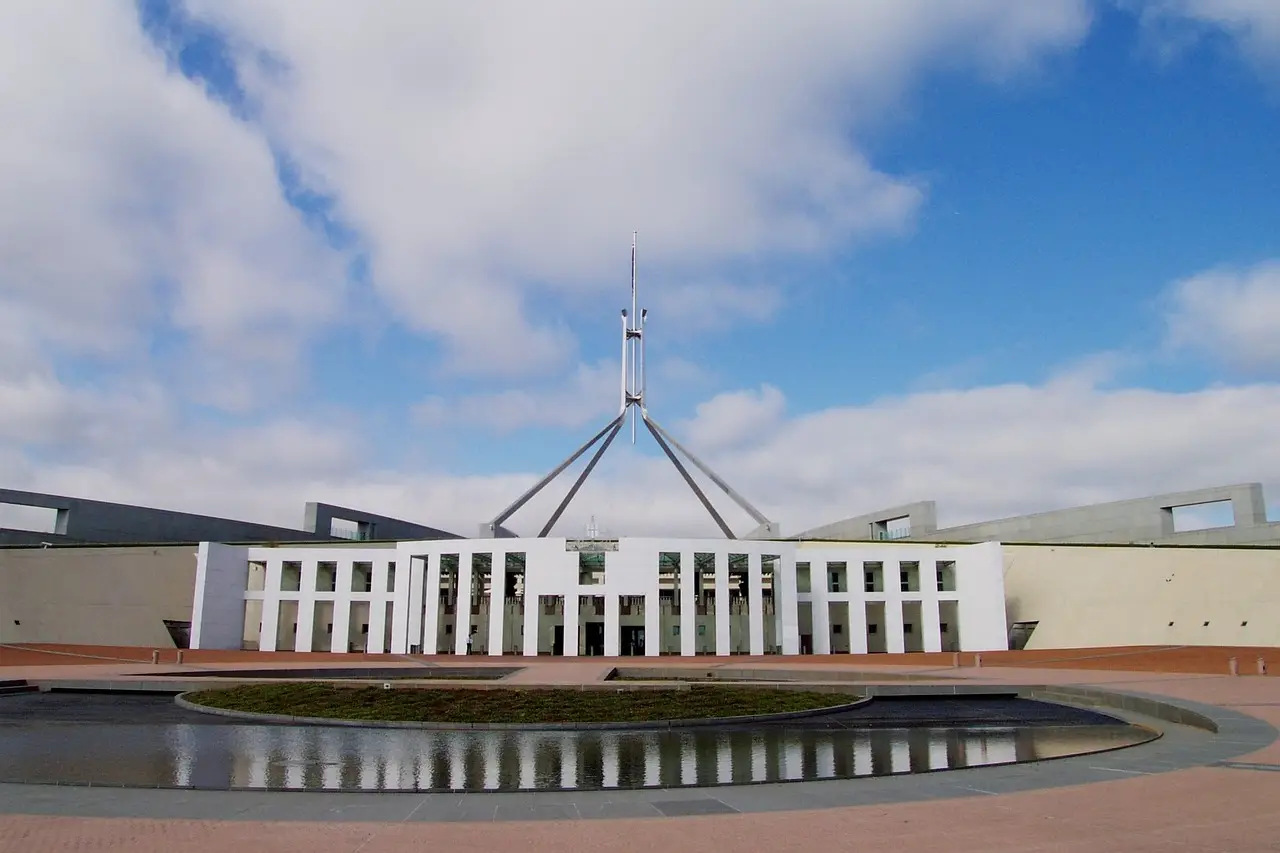
Australia's Parliament passed online safety legislation on Wednesday that exposes major tech platforms to fines of up to 5% of global revenue for failing to prevent foreseeable online harms. The House of Representatives approved the Digital Duty of Care Act by 97 votes to 43. The Senate passed it by 36 votes to 23 a day earlier, after the government struck a deal with the minor Greens party on Tuesday to secure the numbers in a chamber where no party holds a majority.
The law requires Big Tech companies to proactively reduce the risk of harm before it occurs, according to an Australian government statement. It sets minimum safety standards for online services, covering games, apps and artificial intelligence chatbots, and obliges them to protect Australians from seriously harmful material and conduct.
What does the law change for platforms operating in Australia?
The Greens' amendments raised maximum penalties sharply. The government had originally proposed a ceiling of 109 million Australian dollars, roughly 72 million US dollars. The final legislation replaces that cap with 5% of a tech company's global revenue, a shift that turns a fixed fine into an escalating liability for the largest operators and, in practical terms, gives platforms with multibillion-dollar turnover a direct financial reason to redesign safety systems rather than absorb penalties.
Prime Minister Anthony Albanese told Parliament the law would stand as a "powerful instrument to protect our children and our society from online harms by placing the onus on the tech platforms to ensure a safer online environment."
"This is a victory for our children and young people. The dangers were unforeseen when the digital world was young," Albanese said. "But now that the digital world has matured, they can be easily recognized and they can be remedied."
How does it compare with other jurisdictions?
The legislation mirrors duties already imposed elsewhere. It resembles the European Union's Digital Services Act, passed in 2022, and the United Kingdom's Online Safety Act, passed in 2023. The vote tally in the House — 97 to 43 — reflected the comfortable majority held by the centre-left Labor government, though the Senate required negotiation with the Greens to clear the final hurdle.
Greens chief negotiator Sarah Hanson-Young, who negotiated the amendments lifting the penalty ceiling, framed the result as a redistribution of power.
"Today, the safety and wellbeing of Australians and their children have finally been put ahead of Big Tech's bottom line," Hanson-Young said in a statement after the Senate vote. "My message to Big Tech companies is, it's time to make your platforms safe or we will see you in court."
Who is pushing back?
Opposition leader Angus Taylor told Parliament he would repeal the legislation if his conservative Liberal Party wins the elections scheduled for 2028. Taylor described the legislation as "authoritarian" and attacked its reach in direct terms.
"This bill is a blank check for political censorship," Taylor told Parliament. "The bill is an attack on free speech that is absolutely central to our democracy."
The United States government has also objected. U.S. Ambassador to Australia David Brat said on Tuesday that the then-proposed laws would "impose disproportionate compliance burdens on American companies relative to competitors." He posted on social media that "vaguely defined 'harms,' backed by penalties of up to 5% of global revenue, will push platforms to censor lawful speech." His argument, and Taylor's, rests on a single claim practitioners will recognise: a duty to prevent ill-defined harms plus revenue-linked penalties pushes platforms toward over-removal of legal content.
The burden question cuts both ways. The law binds operators to a proactive standard covering games, apps and AI chatbots alongside conventional social platforms, and the enforcement route runs through the courts, as Hanson-Young's statement made explicit. For platform safety, legal and policy teams, the practical task is now mapping foreseeable-harm categories onto existing moderation systems before Australian regulators test the 5% ceiling in practice.
via fastcompany.com (Source)
More from Amara Osei
Show full bio
Correspondent covering people, launches and day-to-day practice in communications business at Comms Memo.
39 articles